
2026-09-14 ·
Water Heater Maintenance Checklist For Torrance Residents
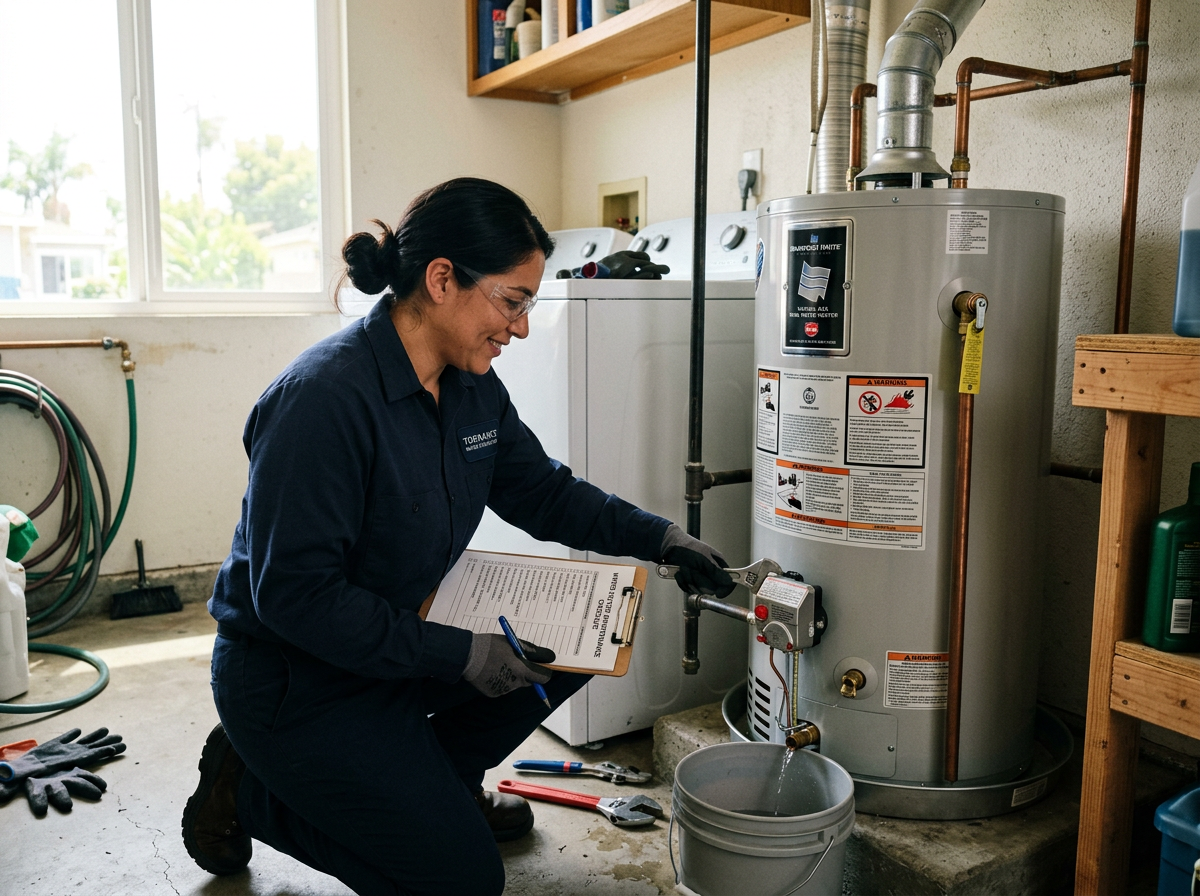
Torrance residents keep water heaters operating safely when they inspect seismic straps at 18 inches from the floor and 4 inches from the top, flush sediment once a year, test the T&P valve every six months, and check the anode rod every two to three years.
Inspecting Seismic Strapping
Torrance sits in a high seismic zone where code requires two straps on every tank water heater. Homeowners should verify that the lower strap sits 18 inches above the floor and the upper strap sits within 4 inches of the tank top. Straps must attach to wall studs with 1/4-inch lag bolts at least 3 inches long. Check for corrosion on the metal bands and replace any strap showing rust or loose hardware. In coastal Torrance the salt air accelerates metal fatigue, so a quick visual inspection every spring prevents failure during an earthquake. Garages require the additional 18-inch elevation rule to keep the burner above any potential gasoline vapors. If straps are missing or incorrectly placed, schedule service through the water heater repair page to bring the installation up to current code before winter storms arrive.
Flushing Sediment from the Tank
Coastal Torrance water carries less mineral content than inland areas, yet fine sediment still settles in the bottom of tanks and reduces efficiency. Shut off the cold-water supply and attach a garden hose to the drain valve at the base of the unit. Open a hot-water faucet on the second floor to allow air in, then open the drain valve fully. Let water run until it flows clear, which usually takes 10 to 15 minutes on a 40- or 50-gallon tank. Repeat the process twice a year in spring and fall. Residents who notice rusty or discolored water during flushing can follow the detailed steps in the sediment flushing guide. Regular flushing also prevents overheating of the lower heating element on electric models and keeps the gas burner clean on natural-gas units common in Torrance neighborhoods.
Testing the Temperature and Pressure Relief Valve
Every water heater in California must have a functioning T&P valve to release excess pressure. Lift the lever on the valve for three to five seconds and confirm water flows freely into the discharge pipe. Release the lever and verify it snaps back into the closed position without dripping. Perform this test twice a year. In Torrance homes with closed plumbing systems, thermal expansion tanks mounted above the water heater help prevent false T&P activations. If the valve leaks after testing or fails to close, replace it immediately; a stuck valve is a common cause of tank rupture. Keep the discharge pipe clear of obstructions and ensure it terminates no more than 6 inches above the floor or outside grade as required by local code.
Checking the Anode Rod and Planning Replacement
Most Torrance tanks last 8 to 12 years when the anode rod is maintained. Remove the hex-head plug on top of the tank and pull the rod using an 11/16-inch socket. If the rod is thinner than 3/8 inch or coated with calcium, replace it with a new magnesium or aluminum-zinc rod suited to local water chemistry. Coastal homes benefit from aluminum-zinc rods that resist the softer, slightly acidic water found near the ocean. When a tank reaches the 10-year mark, compare repair costs against replacement. The water heater replacement service page outlines options for both tank and tankless conversions that meet current venting and gas-line sizing requirements. Track the installation date on the tank label so you can schedule a professional inspection before the warranty expires.