
Same-Day Service Statewide
Water Heater Replacement Across California
Our technicians complete replacements the same day with required seismic strapping, expansion tanks, and code-compliant T&P discharge so every install meets California standards.
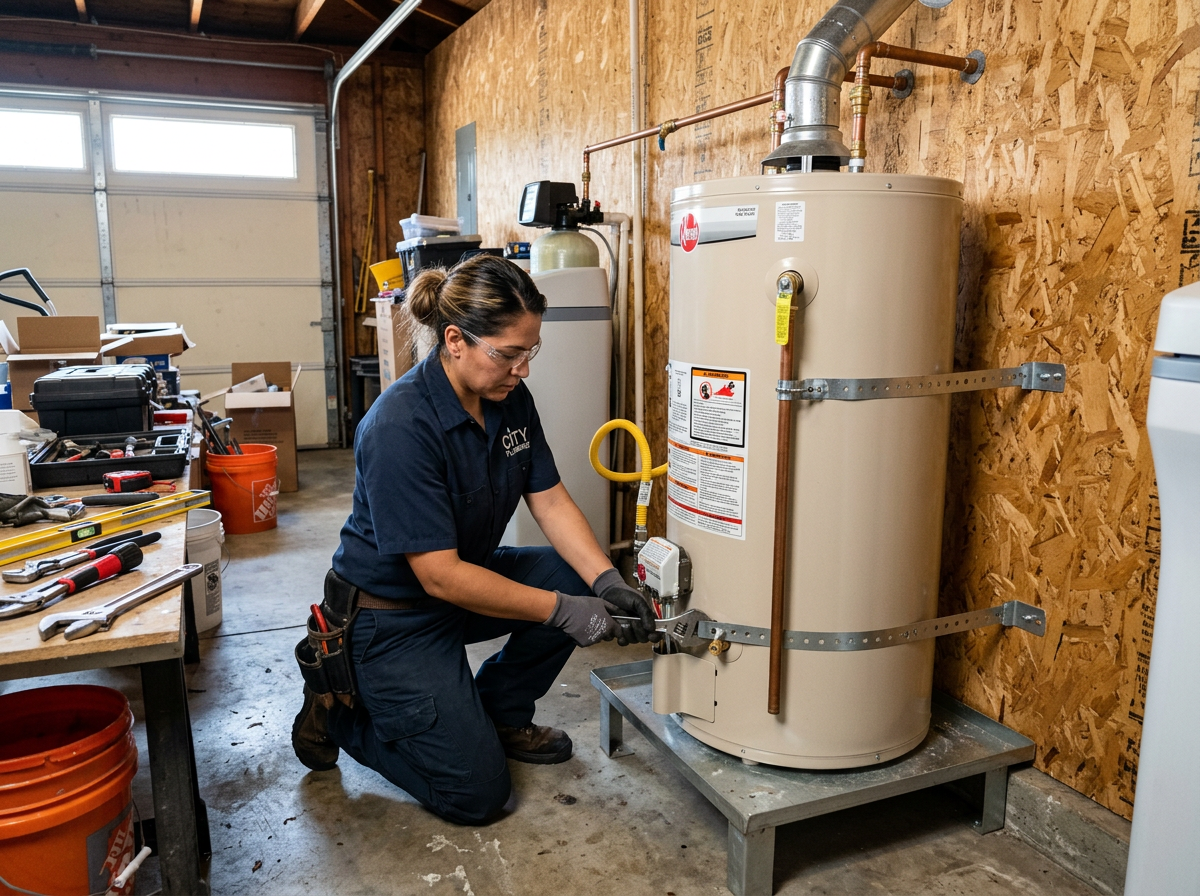
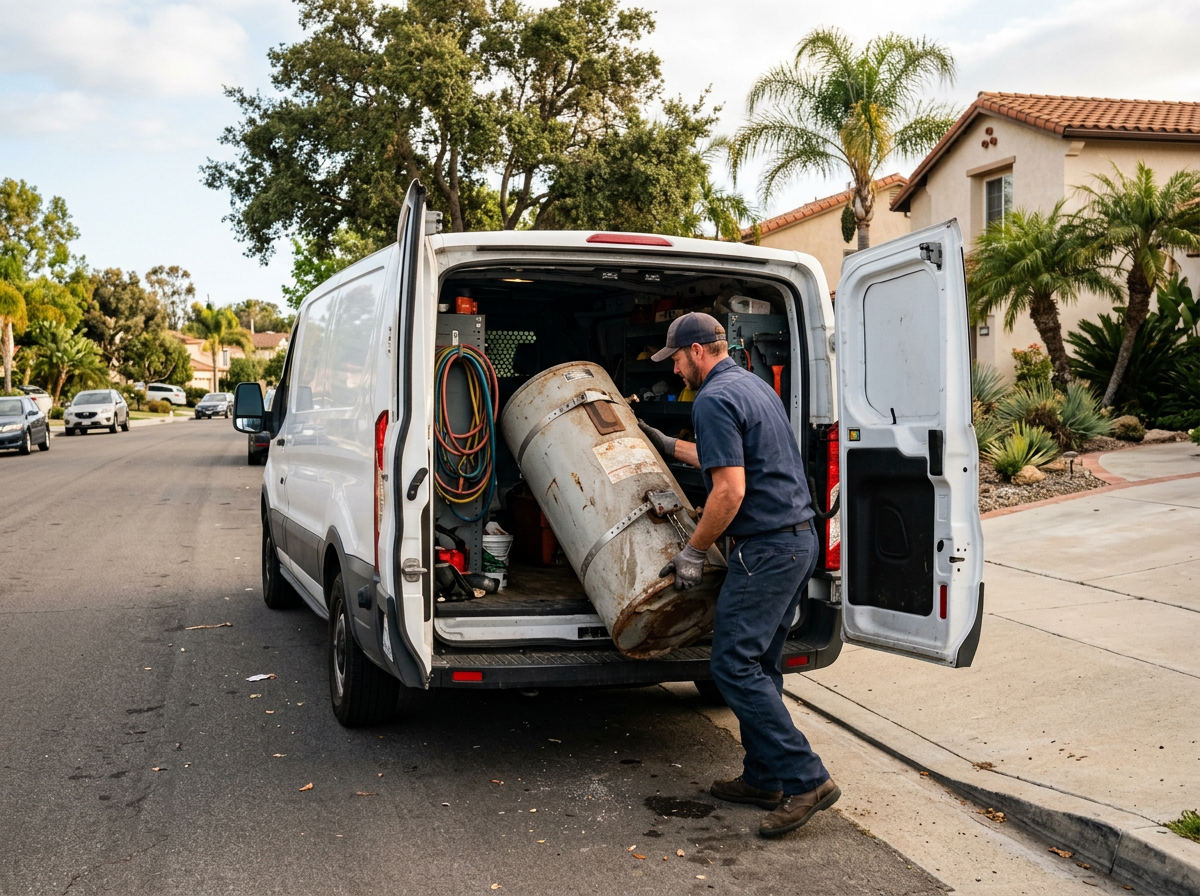
Recent job in Torrance
Hard water scale builds rapidly in Aguanga and cuts tank life, making timely replacement common for homes around Lake Ri…
Aguanga
How We Handle Water Heater Replacement Statewide
From our base at 2430 Amsler St Ste C in Torrance we send crews to every region of California for water heater replacement. Coastal homes often need different anode rod attention than inland or desert properties where harder water shortens tank life. In the Sierra foothills and Sacramento delta many homes run on propane while natural gas is common in the LA basin and Central Coast, so our technicians match the correct fuel type and venting on every job.
We start each water heater replacement by measuring actual household demand instead of simply swapping the existing size. Our crew drains the old unit completely, disconnects all lines, and hauls the tank away before installing the new one. Every replacement includes upper and lower seismic strapping, a thermal expansion tank on closed systems, and full-size T&P discharge piping that terminates outside. Gas units in garages receive the required 18-inch elevation unless the model is FVIR. Before we leave we test for leaks, verify combustion, confirm proper venting, and run hot water at multiple fixtures.
“Upfront quotes with workmanship you can inspect on every water heater replacement across California.”
Water Heater Replacement Services Across California
Water Heater Replacement
Professional water heater replacement that meets California code and avoids the shortcuts that cause… Final scope depends on access, fue.
Water Heater Repair
Expert water heater repair across California that addresses the real failure points technicians see … Final cost depends on the exact co.
Tankless Water Heater Installation
Tankless water heater installation that accounts for California gas line requirements, venting codes… Scope changes with gas line length.
Water Heater Installation
Water heater installation that meets California seismic and plumbing codes while addressing hard wat… Final cost depends on access, requ.
Gas Water Heater Service
Gas water heater service that addresses venting, combustion air, draft, and FVIR requirements common… Scope depends on access, venting c.
Electric Water Heater Service
Targeted electric water heater repair and maintenance for California homes, addressing elements, the… Scope depends on tank access, numb.
7
Specialist services
59+
Cities covered
Free
Estimates & advice
Water Heater Replacement Done Right Across California
We focus on code-correct installs that fit the demands of homes statewide, from coastal zones to inland deserts.
Seismic Strapping On Every Install
Every replacement includes proper strapping to satisfy California's earthquake code requirements.
Right-Sized Units Instead Of Like-For-Like
We measure actual household demand and install the correct capacity rather than matching the old size.
Hard Water Considerations
Replacements in inland and desert regions include steps to manage the mineral content common to those areas.
Expansion Tanks On Closed Systems
We add expansion tanks wherever the plumbing layout requires them to protect the new water heater.
Service From Torrance To Foothills
Our crews handle propane and natural gas units throughout the state's varied regions.
Correct T And P Discharge Routing
Discharge lines are run to meet code and safety standards on every water heater replacement.
Cities we serve
Water Heater Replacement Across California — Cities We Serve
Los Angeles County · Mild Mediterranean climate influenced by the Pacific Ocean.
What to expect, start to finish
Assess Existing Install And Sizing
We start by inspecting the current water heater, checking its capacity against household demand, verifying gas line size, venting condition, and any code requirements such as seismic strapping or thermal expansion control.
Shut Down And Drain
The unit is isolated from power or gas, water supply is turned off, and the tank is drained completely before any removal work begins.
Remove And Haul Away
The old tank is disconnected, including all piping and venting, then carried out and disposed of properly so the space is clear for the new installation.
Install With Strapping, Expansion Tank, T&P And Venting
The replacement unit is set in place with proper seismic strapping, a thermal expansion tank added where the system is closed, a correctly rated T&P valve installed, and venting matched to the appliance type whether natural gas or propane.
Test And Walk Through
After filling and restoring service we check for leaks, confirm temperature settings, operate the T&P valve, and review the new equipment and maintenance points with the homeowner.
Water Heater Replacement and Repair Tips & Guides for California
2026-09-14
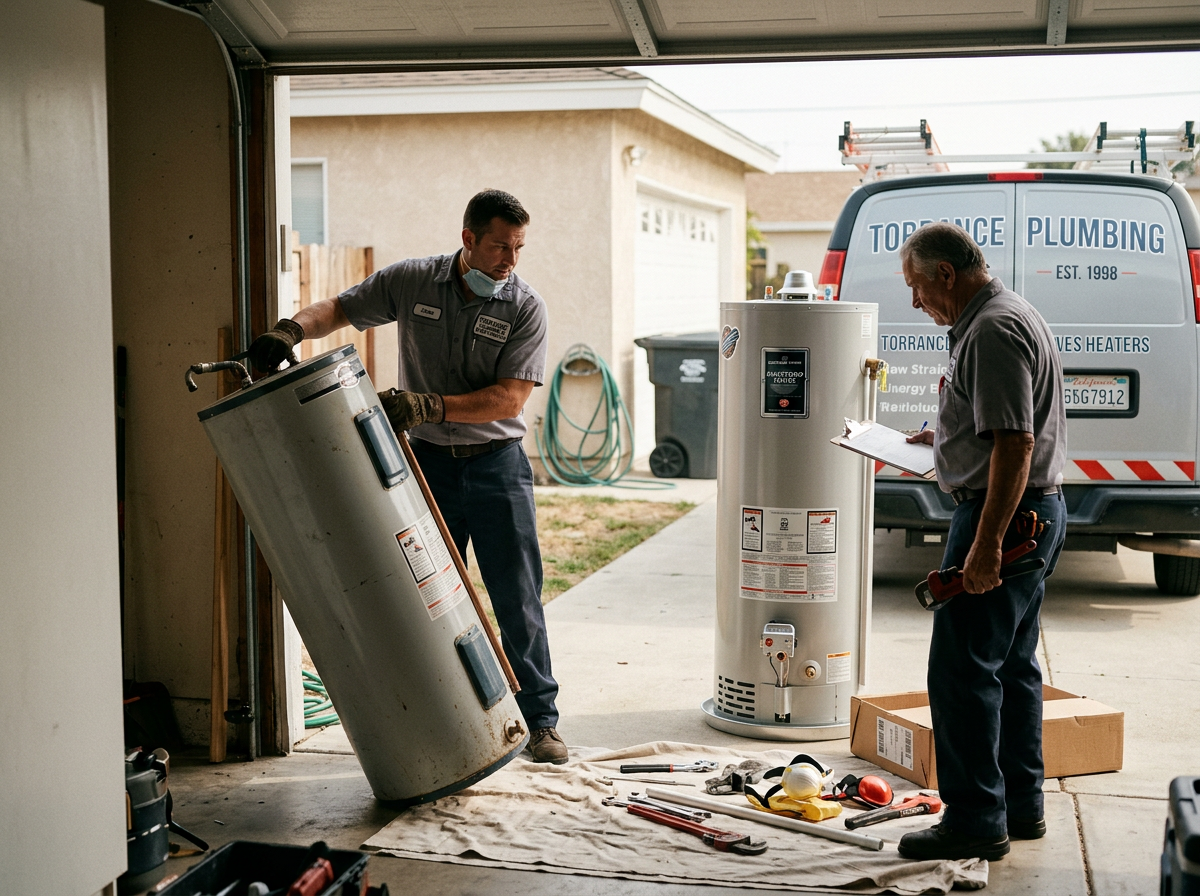
Water Heater Replacement Costs In Torrance
Water heater replacement in Torrance involves more than just the unit itself due to specific California building codes and varying water con…
2026-09-14
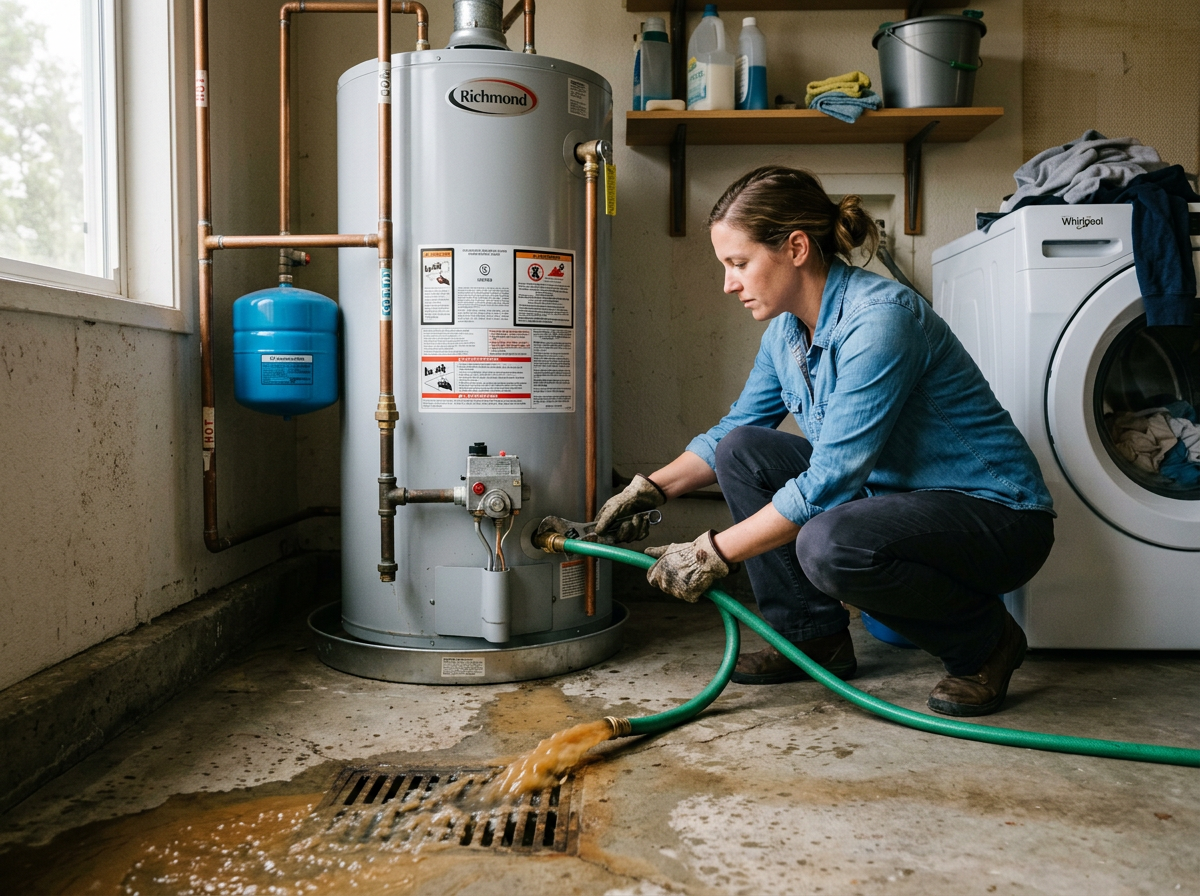
How To Flush Sediment From A Water Heater Tank
Regular flushing removes sediment that reduces efficiency and shortens tank life. This guide covers the process for gas and electric units c…
2026-09-14
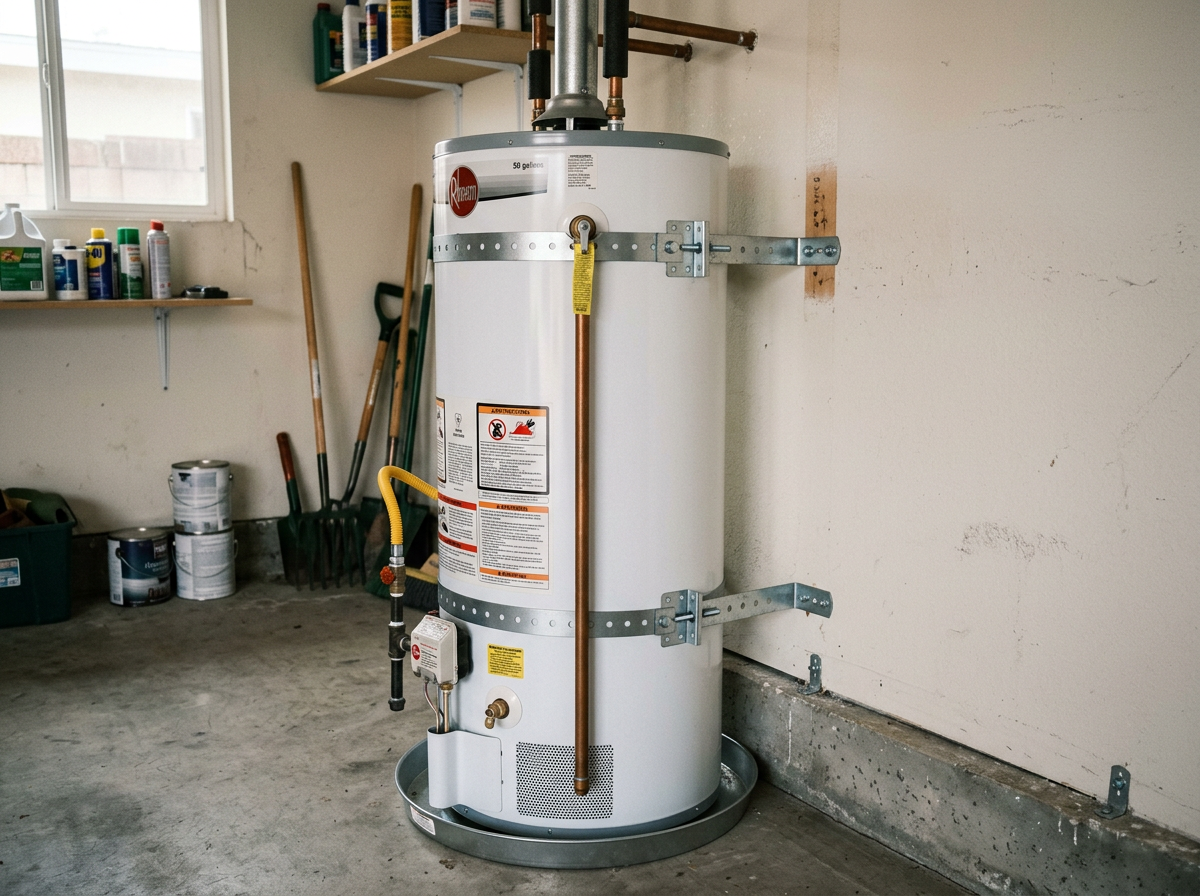
Seismic Strapping Requirements For Water Heaters In Torrance
Torrance follows statewide seismic requirements that secure water heaters against movement during earthquakes. Proper strapping uses two app…
Good to know
Water Heater Replacement FAQs — California
Still have questions? We're happy to talk it through.
(424) 415-6860