
2026-09-14 ·
Seismic Strapping Requirements For Water Heaters In Torrance
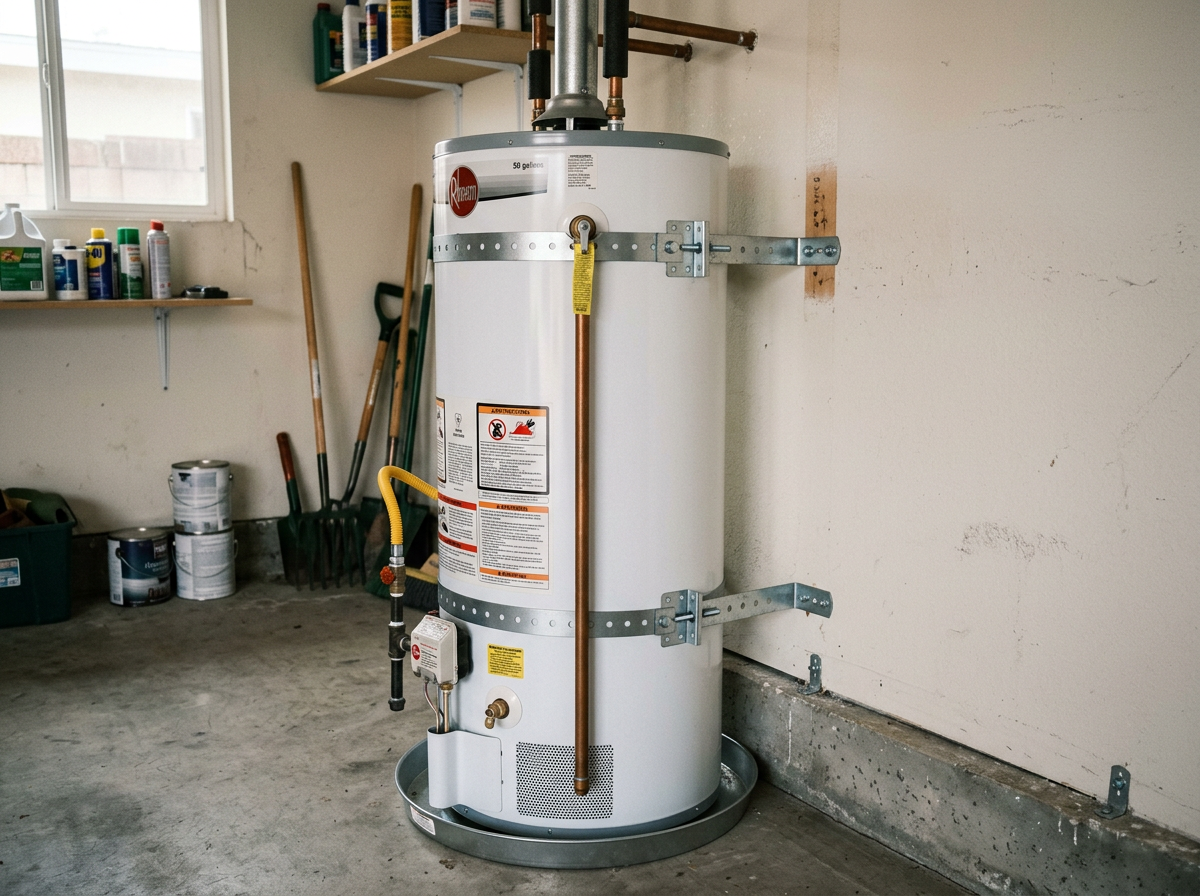
In Torrance, California code requires two seismic straps on every water heater tank, with one placed in the upper third and one in the lower third of the unit, each secured to wall studs with 1/4-inch lag screws at least 3 inches long. This placement prevents the tank from tipping during seismic activity common along the region's fault lines.
Code Requirements in Torrance
California Plumbing Code Section 507.2 mandates seismic strapping for all water heater tanks in Torrance and surrounding areas. Straps must be listed for seismic use and rated to hold the tank weight when full. Installers attach the straps around the tank and fasten them directly into framing members rather than drywall alone. The upper strap sits between 8 and 18 inches from the top of the tank, while the lower strap sits between 8 and 18 inches from the floor. Both straps require a minimum 4-inch clearance from any top or bottom edge to avoid interference with connections. Homeowners replacing a water heater should verify these dimensions before the old unit leaves the property.
Strap Materials and Installation Details
Approved seismic straps are typically 22-gauge galvanized steel or heavier, at least 1 inch wide, and come with buckles or clamps that tighten without damaging the tank jacket. Installers run the straps through slots in the tank or around the circumference and then anchor each end to studs spaced no more than 16 inches apart. When studs are not aligned, blocking between studs provides solid attachment points. The same strapping rules apply to both gas and electric models, though gas units also require flexible gas connectors rated for movement. Water heater replacement projects in Torrance routinely include these straps as part of the installation to meet inspection standards.
Interaction with Other Local Installation Rules
Seismic strapping works together with the 18-inch garage elevation rule and proper T&P discharge piping. In garages, the tank bottom must sit at least 18 inches above the floor, which affects where the lower strap lands. Thermal expansion tanks on closed systems must also be supported so they do not add leverage that could pull against the straps. Hard water conditions found inland from Torrance can shorten tank life to 8–12 years, making secure strapping even more important when an older unit is swapped out. Proper strapping keeps the replacement unit stable for its full service life.
When to Check or Upgrade Strapping
Homeowners should inspect straps after any earthquake of magnitude 4.0 or higher or when selling a home. Visible signs of movement include bent straps, loose lag screws, or gaps between the tank and wall. Older homes built before 1990 often have single-strap or missing strapping that fails current code. Updating straps during a water heater repair visit prevents future issues and satisfies insurance or resale requirements. Technicians can replace inadequate straps without full tank replacement in many cases.
Planning a Compliant Replacement
When selecting a new tank, confirm the model accepts standard seismic straps and that the installation location has accessible studs. Tankless conversions require different mounting considerations but still follow seismic rules for any remaining storage components. Understanding Torrance water quality and water heater longevity helps homeowners time replacements before corrosion weakens the original straps. Always schedule a permit inspection so the city verifies strap placement and attachment before the job is closed.