
2026-09-14 ·
How Often Should You Replace Anode Rods In Coastal Homes
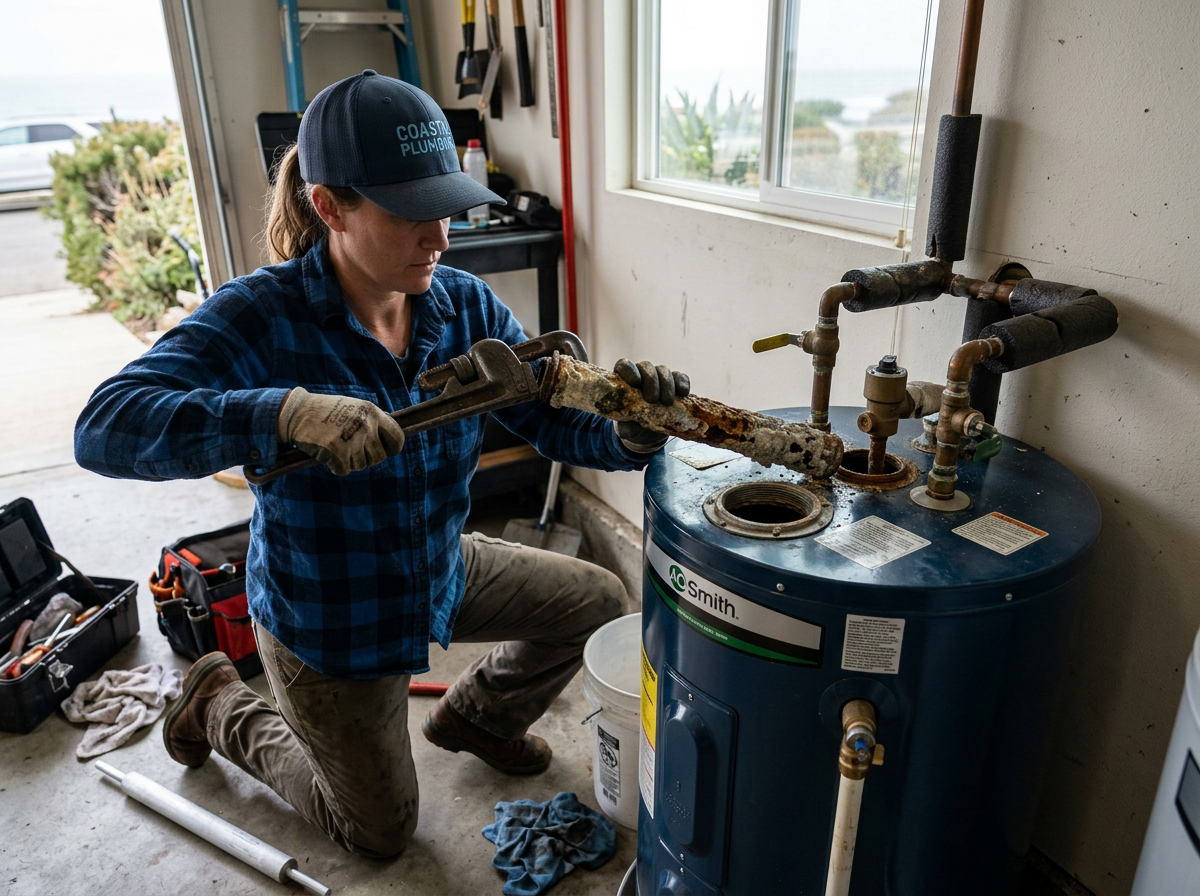
In coastal homes, anode rods should typically be replaced every 3 to 5 years. This interval accounts for the combination of salt-laden air and occasional mineral content that accelerates corrosion compared to inland drier climates. Homeowners in Torrance and nearby coastal zones often see faster depletion on standard magnesium rods inside 40-gallon and 50-gallon tanks.
Why Coastal Conditions Affect Anode Rod Life
Salt air increases humidity and introduces chlorides that speed up the electrochemical reaction inside the tank. Coastal water tends to be softer than the hard water found inland or in desert areas, yet the atmospheric moisture still shortens rod life. A standard magnesium anode rod in a 40-gallon tank exposed to these conditions often loses protective mass within three years. In contrast, aluminum rods may last slightly longer but can produce different sediment issues. Checking the rod at the two-year mark gives a clear picture of local corrosion rates. Homeowners who skip early inspections risk the rod disappearing entirely, after which the tank itself begins to corrode. This pattern holds across many Torrance neighborhoods where ocean influence reaches several miles inland.
Typical Replacement Schedule for Coastal Tanks
Plan the first inspection at 24 months for any tank installed in a coastal setting. If the rod retains more than 50 percent of its original diameter, a second check at 36 months is usually sufficient. Most coastal properties reach the 3-to-5-year replacement window before the rod is fully consumed. Electric tanks with lower operating temperatures may stretch toward the longer end of that range, while gas units that cycle more frequently often need attention closer to three years. Record the installation date on the tank label and mark the next inspection on a calendar. Consistent timing prevents the rod from vanishing between service visits. When the rod shows heavy pitting or measures less than one-quarter inch thick, schedule replacement before the next heating season.
Signs the Anode Rod Requires Attention
Rusty or discolored hot water is an early indicator that the anode rod is no longer providing protection. A sulfur or rotten-egg smell can appear when the rod is depleted and bacteria interact with exposed steel. Unusual rumbling or popping sounds during heating cycles often trace back to sediment that forms once the rod stops working. Visible leaks at the top or bottom of the tank frequently follow years of unchecked rod depletion. In coastal homes, these signs tend to appear sooner than the 8-to-12-year average tank lifespan because of constant humidity. Checking the rod through the hex-head plug on top of the tank reveals its actual condition without guessing. If the rod is gone or reduced to a thin wire, the tank is already at risk.
Inspection and Replacement Steps
Turn off power or gas and shut the cold-water supply before removing the anode rod. Use a 1-1/16-inch socket to loosen the hex head, then lift the rod straight out for measurement. Compare the remaining diameter against the original size; anything under one-quarter inch warrants immediate replacement. Apply thread sealant rated for potable water when installing the new rod and tighten to manufacturer torque specs. Restore water and power only after confirming no leaks at the fitting. For 50-gallon and larger tanks, consider a flexible or powered anode rod that requires less frequent service. Keep a dated photo of each inspection to track corrosion trends over multiple years.
How Anode Rod Care Extends Tank Life
A functioning anode rod can add several years to the 8-to-12-year expected lifespan of a standard tank. In coastal homes, replacing the rod on schedule often prevents the need for early water heater replacement. It also reduces the chance of sudden leaks that require water heater repair. Pairing rod maintenance with proper seismic strapping keeps the unit secure during earthquakes common in the region. Homeowners who track rod condition alongside annual flushing see fewer sediment-related failures. This simple habit protects both the tank and the household water supply without requiring constant professional visits.